JCB Fastrac 4000 vs 6000 vs 8000: Which Tractor Suits Your Farm?
The JCB Fastrac range now covers a wider spread of power and applications than ever before.
The 4000 Series provides a versatile, manoeuvrable tractor for fieldwork, transport and mounted equipment. The newer 6000 Series moves into a higher power class while retaining four-wheel steering and adding greater linkage, hydraulic and precision-farming capability. The 8000 Series remains the range to consider where high power and 70kph transport performance are central to the workload.
Choosing between them is not as simple as moving up through the model numbers. The 6000 and 8000 Series overlap considerably in power, while the 6000 offers some features and capacities that differ from the larger-numbered 8000.
The right JCB Fastrac therefore depends on how the tractor will divide its time between fieldwork, road transport, mounted equipment, rear-deck applications and specialist contracting work.
This guide compares the JCB Fastrac 4000, 6000 and 8000 Series for farmers and contractors across Cambridgeshire, Norfolk, Suffolk, South Lincolnshire and the wider East Anglia region.
JCB Fastrac 4000, 6000 or 8000: the direct answer
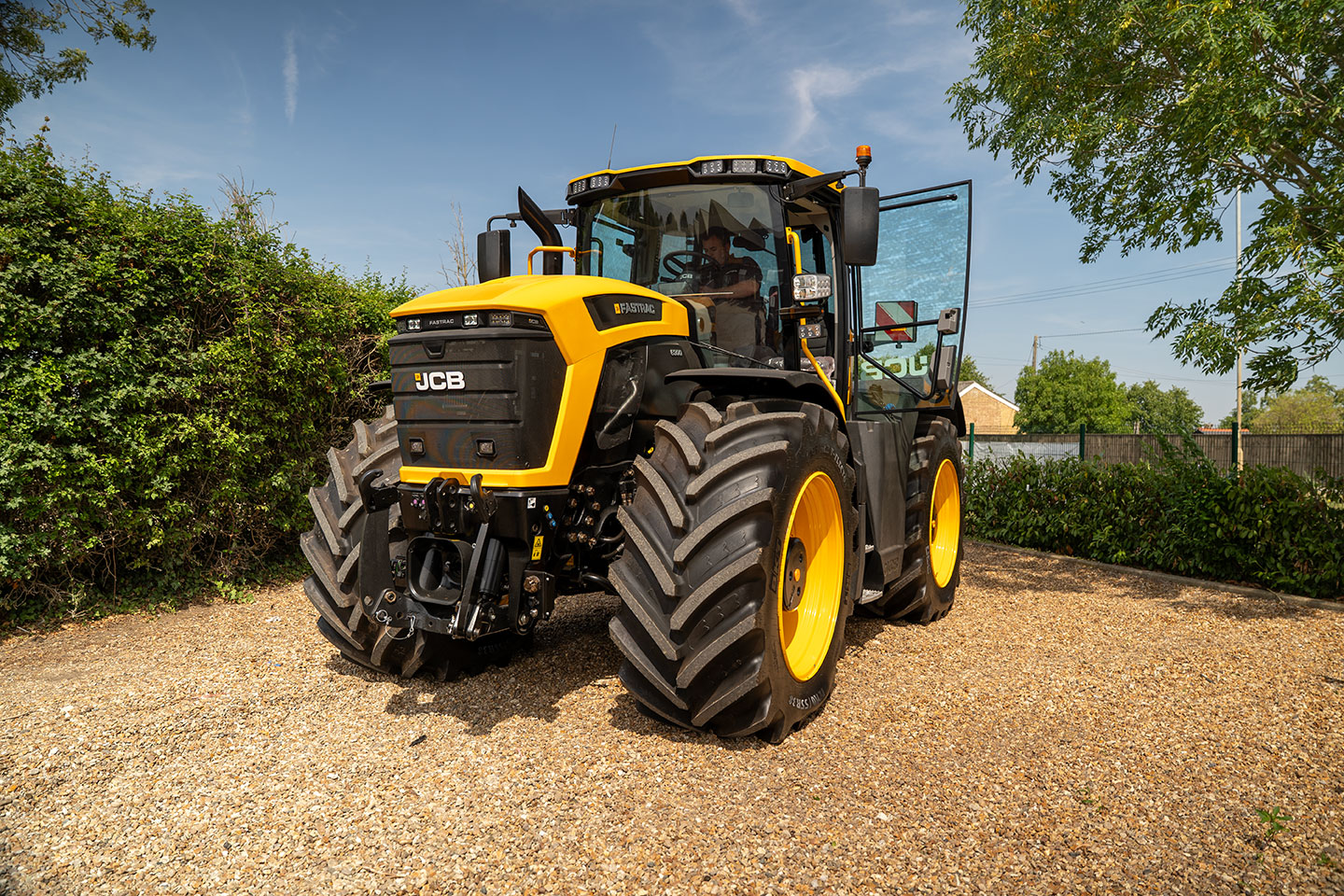
Choose a JCB Fastrac 4000 Series if you need a versatile tractor in the 167hp to 218hp rated power bracket, with four-wheel steering, a 60kph maximum speed and the ability to carry equipment in several positions.
Consider a JCB Fastrac 6000 Series if you need 284hp or 335hp, heavier linkage capacity, multi-mode four-wheel steering and a tractor designed to move between demanding fieldwork and high-speed transport.
Look at the JCB Fastrac 8000 Series if high-power work and 70kph transport are major priorities, particularly where the tractor will spend substantial time hauling, travelling between sites or operating larger equipment.
JCB currently lists three 4000 Series models, two 6000 Series models and two 8000 Series models. Their rated power outputs range from 167hp in the Fastrac 4160 to 335hp in both the Fastrac 6300 and 8330.
| If your main requirement is… | Series to consider first |
|---|---|
| A versatile tractor below 220hp rated power | Fastrac 4000 Series |
| Spraying, spreading and general mixed fieldwork | Fastrac 4000 Series |
| Four-wheel steering in a lower power class | Fastrac 4000 Series |
| A step up to approximately 280hp | Fastrac 6000 Series |
| High-power fieldwork combined with regular transport | Fastrac 6000 Series |
| Four-wheel steering above 280hp | Fastrac 6000 Series |
| Maximum rear linkage capacity within the current range | Fastrac 6000 Series |
| The highest quoted road speed | Fastrac 8000 Series |
| High-power haulage and contracting work | Fastrac 8000 Series |
| Up to 348hp maximum power | Fastrac 8000 Series |
A higher series number does not automatically mean a better tractor for the job. For example, the Fastrac 6300 and 8330 both have a rated output of 335hp, but they sit on different platforms and have different strengths.
Explore the JCB Fastrac tractor range
JCB Fastrac range comparison
| Fastrac 4000 Series | Fastrac 6000 Series | Fastrac 8000 Series | |
|---|---|---|---|
| Current models | 4160, 4190, 4220 | 6260, 6300 | 8290, 8330 |
| Rated power | 167hp to 218hp | 284hp to 335hp | 281hp to 335hp |
| Maximum power | 178hp to 235hp | 284hp to 335hp | 306hp to 348hp |
| Quoted maximum speed | Up to 60kph | Up to 66kph | Up to 70kph |
| Rear linkage capacity | 7,000kg to 8,000kg, depending on model | 11,000kg | 10,000kg |
| Steering emphasis | Selectable four-wheel steering | Multi-mode four-wheel steering | High-speed stability and dual-line steering safety system |
| General role | Versatile field, transport and implement tractor | High-power field and transport all-rounder | High-power tractor with a strong transport emphasis |
| Typical buyers | Arable farms, mixed farms, vegetable growers and contractors | Large arable farms, contractors and specialist growers | Large farming businesses and high-mileage contractors |
| Main buying priority | Versatility and manoeuvrability | Power, implement capacity and all-round use | Road speed, power and transport output |
The speeds shown are manufacturer maximums. The appropriate operating speed will depend on the tractor specification, tyres, attached equipment, road conditions and applicable legal requirements.
JCB Fastrac 4000 Series overview
The Fastrac 4000 Series consists of the:
- JCB Fastrac 4160
- JCB Fastrac 4190
- JCB Fastrac 4220
Rated power starts at 167hp in the 4160, rises to 189hp in the 4190 and reaches 218hp in the 4220. Maximum outputs are 178hp, 210hp and 235hp respectively. All three use six-cylinder engines and a continuously variable transmission managed through JCB’s Smart Transmission Control system.
The 4000 Series also has selectable four-wheel steering, all-round hydropneumatic suspension and a maximum quoted speed of 60kph. JCB provides five possible locations for equipment, including the rear linkage, front linkage and rear deck.
In practical terms, the 4000 Series is likely to suit buyers who want the Fastrac road and suspension concept without moving into the power, size and capacity of the 6000 or 8000 Series.
Who is the JCB Fastrac 4000 Series best for?
Likely users include:
- medium and large arable farms;
- vegetable and root-crop businesses;
- mixed farms with significant field and transport work;
- spraying and spreading contractors;
- baling and forage contractors;
- farms operating rear-deck equipment;
- businesses moving machinery regularly between sites;
- local authorities and specialist operators.
The 4160 and 4190 may appeal to farms that do not need more than 200hp for most work, while the 4220 provides additional power for larger implements, trailers and higher-output field operations.
Fastrac 4000 Series linkage and hydraulics
The 4160 has a published rear linkage capacity of 7,000kg. The 4190 has 7,000kg as standard, with an 8,000kg option, while the 4220 has an 8,000kg rear linkage.
JCB quotes an optional front linkage capacity of 3,500kg and maximum hydraulic flow of 195 litres per minute across the range.
Those figures make the 4000 Series suitable for a broad spread of mounted and hydraulic equipment. However, buyers should still check implement weight, hydraulic demand, spool requirements and weight distribution for the exact tractor specification.
JCB Fastrac 6000 Series overview
The JCB Fastrac 6000 Series is the newest of the three ranges and currently consists of:
- JCB Fastrac 6260
- JCB Fastrac 6300
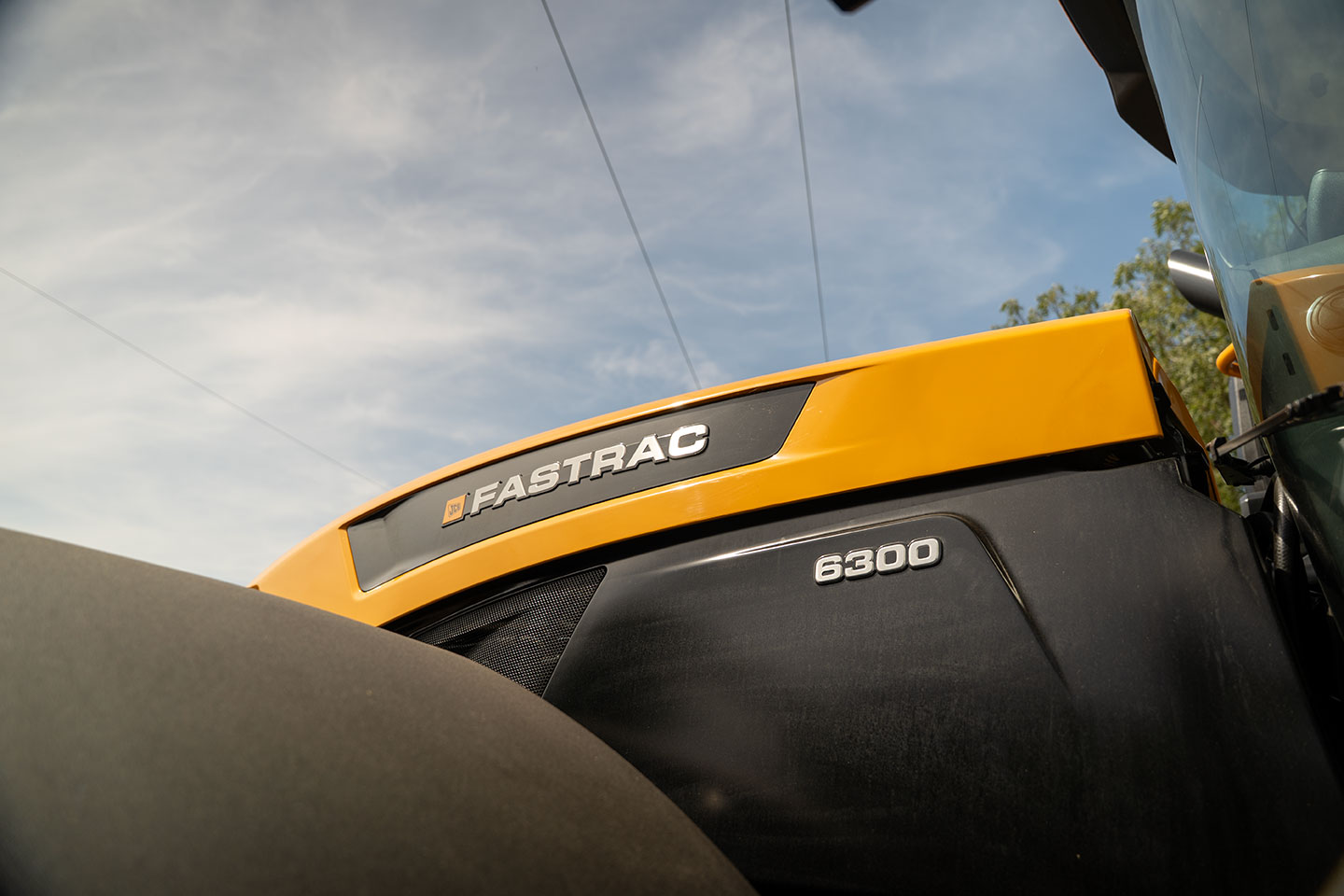
The 6260 has a published rated and maximum output of 284hp, while the 6300 produces 335hp. JCB quotes maximum torque figures of 1,275Nm and 1,400Nm respectively.
Both models have an 11,000kg rear linkage and an optional 5,000kg front linkage. Standard hydraulic flow is 205 litres per minute, with a 410 litre-per-minute option listed for the 6300.
This places the 6000 Series firmly in the high-power tractor market.
What is different about the Fastrac 6000 Series?
The 6000 Series is not simply a more powerful version of the 4000.
It has been developed on a new platform with:
- multi-mode four-wheel steering;
- front and rear linkages and PTOs;
- a rear equipment deck;
- Smart Transmission Control;
- a quoted speed range from zero to 66kph;
- integrated JCB GPS guidance;
- dual satellite receivers;
- automated headland-turn guidance;
- ISOBUS compatibility;
- configurable iCON controls;
- an optional second display.
JCB also offers a Central Tyre Inflation System on the 6300, allowing the operator to change between field and road tyre pressures from the cab.
Who is the JCB Fastrac 6000 Series best for?
The strongest applications are likely to include:
- large arable farms;
- high-acreage mixed farms;
- root-crop and vegetable businesses;
- agricultural contractors;
- heavy cultivation work;
- high-output drilling;
- large-scale spreading and spraying;
- forage operations;
- substantial grain and produce haulage;
- businesses moving regularly between fields or customer sites.
The 6260 fills a particularly useful position. At 284hp, it offers a considerable step up from the 235hp maximum output of the 4220 without moving directly to the 335hp class.
The 6300 then overlaps with the Fastrac 8330 in rated power, but combines that power with four-wheel steering, an 11-tonne rear linkage and the newer 6000 Series platform.
JCB Fastrac 8000 Series overview
The current 8000 Series consists of:
- JCB Fastrac 8290
- JCB Fastrac 8330
JCB publishes rated outputs of 281hp for the 8290 and 335hp for the 8330. Maximum power rises to 306hp and 348hp respectively.
The range has a quoted maximum speed of 70kph, a 10,000kg rear linkage and a full-length chassis with space behind the centrally mounted cab for ballast or mounted equipment. It also uses all-round hydropneumatic suspension, all-round disc braking and ABS.
The 8000 Series therefore remains highly relevant to businesses where road work and transport productivity account for a substantial proportion of annual tractor hours.
Who is the JCB Fastrac 8000 Series best for?
Likely buyers include:
- large arable businesses;
- agricultural contractors;
- farms split across several blocks of land;
- grain and root-crop haulage operations;
- forage contractors;
- operators transporting large equipment;
- businesses using rear-deck mounted equipment;
- customers prioritising 70kph travel capability.
The 8000 Series should not be viewed only as a haulage tractor. It has the power and linkage capacity for substantial field equipment. However, its 70kph capability becomes most valuable when the business can make genuine use of it.
What is the difference between the Fastrac 4000 and 6000 Series?
The biggest difference is not road speed. It is the move into a different power and implement-capacity class.
The most powerful 4000 Series model, the 4220, has a rated output of 218hp and maximum output of 235hp. The entry 6000 Series model, the 6260, produces 284hp.
The 6000 Series also raises rear linkage capacity to 11,000kg, compared with a maximum of 8,000kg on the 4000 Series. Optional front linkage capacity rises from 3,500kg to 5,000kg.
Choose the 4000 Series where:
- most implements sit comfortably below the 4000 Series’ power and weight limits;
- manoeuvrability is important;
- spraying, spreading or lighter fieldwork forms a large part of the workload;
- the tractor regularly uses rear-deck equipment;
- 60kph is sufficient for the farm’s transport work;
- a lower-powered Fastrac would be better utilised.
Move towards the 6000 Series where:
- implements are regularly beyond the comfortable working range of the 4220;
- the tractor will carry out heavier draft work;
- additional linkage and hydraulic capacity is needed;
- high-output contracting work is involved;
- the business needs more than 280hp;
- high power must be combined with four-wheel steering;
- road and field performance are equally important.
Buying a 6000 Series simply because it is newer would not necessarily be sensible. Its additional weight, power and capacity need enough work to justify them.
What is the difference between the Fastrac 6000 and 8000 Series?
This is a more complicated comparison because the two ranges overlap in power.
The Fastrac 6260 produces 284hp, which is close to the 8290’s rated output of 281hp. The Fastrac 6300 and 8330 both have rated outputs of 335hp, although the 8330 has a higher published maximum output of 348hp.
The decision therefore needs to be based on the platform and workload, not just horsepower.
Reasons to consider the 6000 Series
The 6000 Series offers:
- multi-mode four-wheel steering;
- an 11,000kg rear linkage;
- optional 5,000kg front linkage;
- up to 410 litres per minute of hydraulic flow on the 6300;
- a quoted maximum speed of 66kph;
- integrated dual-receiver GPS;
- automated headland-turn functions;
- optional Central Tyre Inflation System on the 6300.
Those features make it especially relevant where field manoeuvrability, heavy mounted equipment and precision work carry as much weight as road performance.
Reasons to consider the 8000 Series
The 8000 Series offers:
- a maximum speed of 70kph;
- up to 348hp maximum power;
- a 10,000kg rear linkage;
- a substantial full-length chassis;
- rear-deck carrying capacity;
- all-round suspension;
- braking and steering systems developed around high-speed operation.
That gives the 8000 Series a particularly clear role for high-mileage transport and contracting work.
For buyers comparing a 6300 with an 8330, an on-farm demonstration should include both field and road work. A short drive around a dealer yard will not reveal the differences that matter.
Which JCB Fastrac is best for arable farms?
Medium arable farms: Fastrac 4000 Series
The Fastrac 4000 Series is likely to suit farms where spraying, spreading, drilling, light-to-medium cultivations and trailer work form the core workload.
The 4220 provides the most headroom within the range, while the 4160 and 4190 may make better financial and operational sense where the implements do not require more power.
A tractor does not need to be the highest-powered machine on the farm to be heavily utilised. A 4000 Series could cover a large number of hours on fertiliser, crop protection, transport and general field duties.
Large arable farms: Fastrac 6000 or 8000 Series
The 6000 and 8000 Series become more relevant where:
- cultivation equipment is larger;
- drilling output is a priority;
- field-to-field travel is significant;
- the tractor pulls high-capacity trailers;
- grain or root crops travel longer distances;
- contractors or neighbouring farms share machinery;
- the tractor must carry out both heavy field and road work.
The 6000 Series is likely to appeal where four-wheel steering, linkage capacity and newer precision functions are important.
The 8000 Series is likely to remain attractive where high-speed transport is one of the tractor’s defining jobs.
Which JCB Fastrac is best for road work?
All three ranges are designed to combine field and road work, but the appropriate choice depends on the power requirement and the amount of travelling involved.
Fastrac 4000 Series
With a quoted maximum speed of 60kph, the 4000 Series can suit farms and contractors moving between local blocks of land while operating equipment that fits its power bracket.
It may be the more proportionate option where transport matters but does not justify a tractor above 280hp.
Fastrac 6000 Series
The 6000 Series raises the quoted maximum speed to 66kph while combining it with 284hp or 335hp and four-wheel steering.
It should suit businesses that need a serious field tractor but also expect it to cover substantial distances with equipment or trailers.
Fastrac 8000 Series
The 8000 Series has the highest quoted speed at 70kph.
It is the first range to consider where the tractor’s annual workload includes a particularly high proportion of road haulage. However, reaching the maximum possible speed should not be the sole reason to select it. Trailer specification, braking, tyres, payload, routes and legal requirements all need to be assessed.
Which JCB Fastrac is best for cultivation and drilling?
For lighter drills and cultivators, the 4000 Series may provide enough power and linkage capacity while retaining a smaller and more manoeuvrable platform.
The 6000 Series becomes relevant where larger equipment, higher draft loads and heavier mounted implements are involved. Its 11,000kg rear linkage gives it the highest published rear lift capacity of the three current Fastrac ranges.
The 8000 Series also has the power and 10,000kg rear linkage capacity required for substantial equipment, while offering an advantage where that equipment needs to be moved regularly between distant blocks of land.
The most appropriate tractor cannot be selected from implement working width alone. Buyers should provide the dealer with:
- implement make and model;
- working and transport weight;
- draft requirement;
- hydraulic requirement;
- number of services needed;
- tyre and ballast requirements;
- transport dimensions;
- expected working speed.
Which JCB Fastrac is best for spraying and spreading?
The 4000 Series has traditionally been a strong fit for spraying and spreading because of its speed, all-round suspension, four-wheel steering and rear-deck mounting possibilities.
It can be particularly useful where the tractor must cover significant acreage, travel between blocks and operate both mounted and trailed equipment.
The 6000 Series adds more power, hydraulic capacity and integrated precision technology. The multi-mode steering system may also benefit specialist vegetable, row-crop and bed work where accurate tracking and tight headland turns are important. JCB’s optional Twin Steer system can control both axles through the guidance system.
The 8000 Series may suit larger trailed equipment or high-capacity operations where travel speed between sites is especially important.
The best choice will depend on the loaded equipment weight, tyre options, crop layout, tramline system and daily road mileage.
Which JCB Fastrac is best for agricultural contractors?
Contractors need to look beyond the toughest job on the order book.
The more useful question is which work produces most of the tractor’s annual hours and revenue.
Fastrac 4000 Series
Likely to suit:
- spraying and spreading;
- baling;
- hedge and verge work;
- lighter cultivations;
- general trailer work;
- specialist rear-deck equipment;
- contracts where manoeuvrability matters.
Fastrac 6000 Series
Likely to suit:
- high-output drilling;
- heavy cultivation;
- large-scale spreading;
- forage and slurry work;
- contractors needing high power and four-wheel steering;
- work involving frequent implement changes;
- mixed road and field contracts.
Fastrac 8000 Series
Likely to suit:
- high-mileage contracting;
- large trailer work;
- moving heavy equipment between sites;
- high-power field operations;
- jobs where 70kph capability can reduce non-working travel time.
Utilisation matters. The most expensive or powerful option is not automatically the one that will deliver the best return.
Which JCB Fastrac is best for vegetable and root-crop farms?
East Anglia has a significant number of vegetable, salad, potato and root-crop businesses where tractor requirements differ from straightforward broad-acre arable work.
Accurate steering, crop clearance, tyre choice, bed tracking, headland manoeuvrability and transport performance can all influence the decision.
The 4000 Series remains relevant where its power range suits the equipment and the tractor is required for spraying, spreading, haulage or specialist rear-deck applications.
The 6000 Series should be considered where greater power is needed while retaining four-wheel steering. Its dual-receiver guidance and optional Twin Steer system may be particularly relevant where implement tracking and repeatable bed positioning are important.
The 8000 Series may be appropriate where higher-powered fieldwork and longer-distance root-crop haulage form a larger proportion of the workload.
Questions to answer before choosing a Fastrac
How much of the working year is spent on the road?
Estimate the number of annual road hours, not just the distance between the farm and the furthest field.
Include journeys between customers, stores, rented land and processing sites.
What implements will the tractor operate?
Record the actual equipment rather than simply stating that the tractor will carry out “general arable work”.
Power requirement alone is not enough. Linkage weight, hydraulic demand, PTO requirement and transport weight all need to be considered.
Does the farm need four-wheel steering?
Both the 4000 and 6000 Series provide four-wheel-steering capability. This may make them especially attractive where the tractor operates in smaller fields, tight headlands, narrow gateways or specialist crop systems.
Will equipment be carried on the rear deck?
The rear deck is one of the defining practical features of the Fastrac concept.
Its likely uses, loaded weight, connections and effect on overall machine balance should be discussed as part of the specification process.
Is the tractor mainly for transport or fieldwork?
Many buyers will answer “both”, but the split still matters.
A tractor spending 60 per cent of its time hauling may need a different specification from one spending 80 per cent of its time operating a cultivator.
Is the current tractor regularly working at its limit?
Occasional heavy work does not always justify moving to a larger series.
Regularly running short of power, linkage capacity, hydraulic output or payload capability is a stronger reason to step up.
Which precision-farming systems are already used?
Existing guidance subscriptions, implement controllers, ISOBUS equipment, farm-management software and correction signals should all be checked before ordering.
Compatibility is more important than simply choosing every available technology option.
A practical Pecks view
“The first thing to establish is where the tractor’s hours are actually going. A 4000 Series can be a very productive machine when the workload sits comfortably within its power range, particularly for spraying, spreading, transport and general fieldwork. The 6000 Series is a different class of tractor, with much more implement capacity and high power combined with four-wheel steering. The 8000 Series still makes a strong case where road mileage and 70kph transport are major parts of the job. The right answer normally becomes clearer once we look at the customer’s implements, routes and annual workload.”
Why an on-farm Fastrac demonstration matters
The differences between the three ranges are difficult to judge from specifications alone.
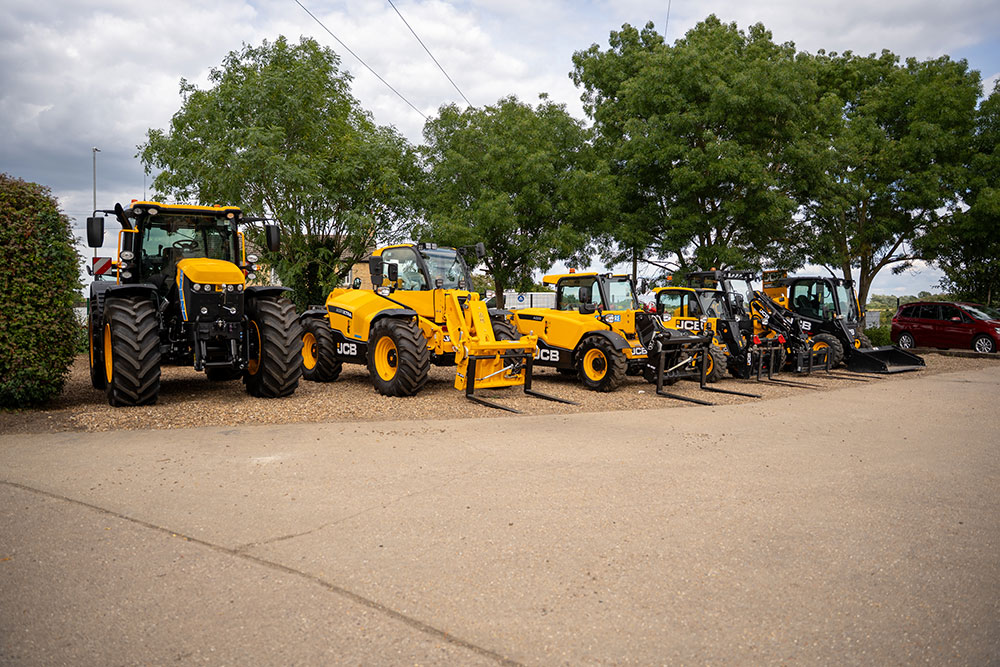
An on-farm demonstration should cover the work the tractor is actually being considered for. Ideally, it should include:
- connection to a principal implement;
- headland turns;
- access through field gateways;
- low-speed control;
- hydraulic operation;
- road travel;
- trailer operation where appropriate;
- visibility;
- control configuration;
- GPS and ISOBUS operation;
- daily maintenance access;
- feedback from every regular operator.
For a 6000 vs 8000 comparison, include a meaningful road route and a field task. Testing only one side of the workload will not provide a fair comparison.
JCB Fastrac sales and support across East Anglia
Pecks provides JCB tractor sales, servicing, parts and aftersales support through its depot network.
The company’s JCB tractor operation covers the Fastrac range and supports customers from choosing a machine and specification through to delivery, servicing and ongoing aftersales requirements.
Pecks also has dedicated service centres at each depot, more than 50 specialist engineers and seven-day support arrangements.
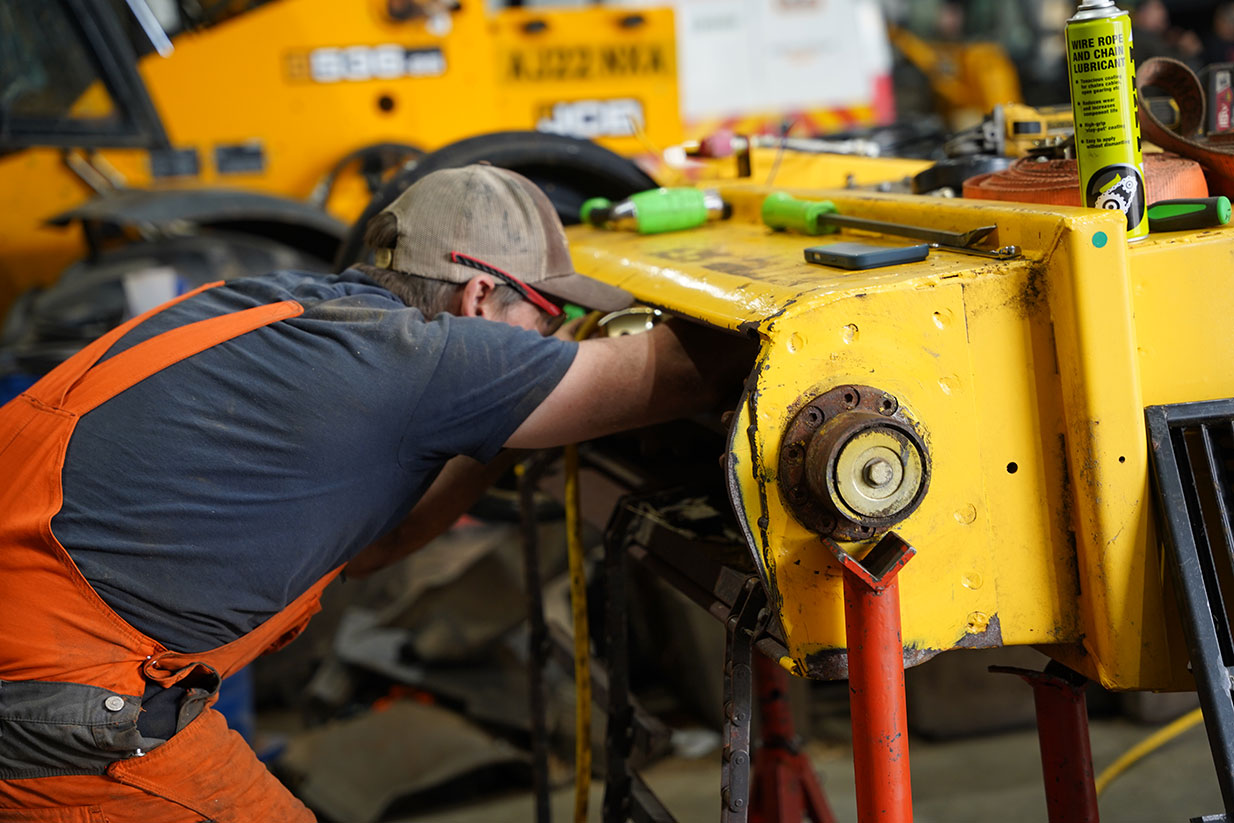
JCB Fastrac support in Cambridgeshire and South Lincolnshire
Customers looking for a JCB Fastrac for sale in Cambridgeshire or South Lincolnshire can contact Pecks’ Chatteris head office.
The depot provides machinery sales, parts and service support and is already listing new-generation Fastrac 6000 Series machinery through Pecks’ stock system.
Pecks Chatteris
Iretons Way
Chatteris
Cambridgeshire
PE16 6UZ
Telephone: 01354 699505
JCB Fastrac support in Norfolk
Pecks’ Dereham depot provides local agricultural machinery sales, parts and servicing support for farmers and contractors across Norfolk.
The depot has named agricultural sales and territory service personnel, as well as parts and out-of-hours support arrangements.
Pecks Dereham
Yaxham Road Industrial Estate
Greens Road
Dereham
Norfolk
NR20 3TG
Telephone: 01362 698698
JCB Fastrac support in Suffolk
Farmers and contractors looking for a JCB Fastrac dealer in Suffolk can contact Pecks’ Rendlesham depot.
The depot provides agricultural machinery sales, servicing, parts and out-of-hours support from Bentwaters Parks near Woodbridge.
Pecks Rendlesham
Bentwaters Parks
Rendlesham
Woodbridge
Suffolk
IP12 2TW
Telephone: 01728 441400
JCB Fastrac servicing, parts and aftersales
Dealer support should be considered alongside power, road speed and specification.
A Fastrac may be central to time-sensitive spraying, drilling, harvest transport or contracting work. Access to trained engineers and the correct parts can therefore have a direct effect on the business.
Pecks provides JCB servicing and repair support through its depot workshops and engineering team. Genuine JCB parts can also be ordered through Pecks, including online ordering with delivery or click-and-collect options.
Before ordering, buyers should discuss:
- expected annual hours;
- service intervals;
- seasonal workload;
- warranty and service options;
- tyre specification;
- braking and trailer requirements;
- software and guidance support;
- likely replacement cycle;
- out-of-hours arrangements.
JCB servicing and aftersales support
Order genuine JCB parts online
Which JCB Fastrac is right for your business?
Choose the Fastrac 4000 Series if:
- your workload generally sits below 220hp rated power;
- spraying, spreading and mixed fieldwork are key jobs;
- four-wheel steering is important;
- 60kph maximum speed suits the operation;
- rear-deck equipment will be used;
- manoeuvrability matters more than maximum linkage capacity;
- a 6000 Series would be underutilised.
Consider the Fastrac 6000 Series if:
- you need 284hp or 335hp;
- high-power fieldwork and transport are both important;
- four-wheel steering is required at this power level;
- heavier mounted implements are used;
- additional hydraulic capacity is needed;
- an 11,000kg rear linkage is relevant;
- integrated precision functions suit the farming system;
- the 6300’s available Central Tyre Inflation System would be useful.
Consider the Fastrac 8000 Series if:
- 70kph capability can provide a genuine operational benefit;
- road mileage accounts for a high proportion of annual hours;
- large trailers or equipment move regularly between sites;
- maximum power of up to 348hp is required;
- the tractor will combine high-power field operations with haulage;
- the established 8000 Series platform better suits the intended work.
The final decision should be based on utilisation, not solely on horsepower or the model number.
Arrange a JCB Fastrac demonstration in East Anglia
Pecks supports customers considering new JCB tractors across Cambridgeshire, Norfolk, Suffolk and South Lincolnshire.
Before deciding between a Fastrac 4000, 6000 or 8000 Series, speak to the Pecks JCB team about:
- the tractor being replaced;
- expected annual hours;
- current and future implements;
- field sizes and soil types;
- transport distances;
- trailer requirements;
- rear-deck applications;
- hydraulic demand;
- precision-farming equipment.
An on-farm demonstration will provide a more useful answer than comparing brochure figures alone.
Frequently asked questions
Which JCB Fastrac should I buy?
Choose the 4000 Series where versatility, four-wheel steering and up to 235hp maximum power meet the workload.
Consider the 6000 Series where 284hp or 335hp, heavier linkage capacity and high-power four-wheel-steer performance are needed.
Look at the 8000 Series where high power and 70kph road capability are central to the operation.
What models are in the current JCB Fastrac range?
The current range includes:
– Fastrac 4160
– Fastrac 4190
– Fastrac 4220
– Fastrac 6260
– Fastrac 6300
– Fastrac 8290
– Fastrac 8330
Their published rated outputs range from 167hp to 335hp.
What is the most powerful JCB Fastrac?
The Fastrac 8330 has the highest published maximum power figure at 348hp.
The Fastrac 6300 and 8330 both have rated outputs of 335hp, but the 8330 has a higher maximum output.
What is the top speed of a JCB Fastrac?
JCB quotes maximum speeds of:
– up to 60kph (37mph) for the 4000 Series;
– up to 66kph (41mph) for the 6000 Series;
– up to 70kph (43mph) for the 8000 Series.
Actual and permitted operating speed depends on the tractor, equipment, tyres, road and legal requirements.
Is the Fastrac 6000 Series replacing the 8000 Series?
JCB currently lists the 6000 and 8000 as separate parts of its tractor range.
The models overlap in power, but the 6000 Series offers a newer four-wheel-steer platform with an 11,000kg rear linkage, while the 8000 Series retains a 70kph maximum speed and up to 348hp maximum power.
What is the difference between a Fastrac 4220 and 6260?
The 4220 has a rated output of 218hp and maximum output of 235hp. It has an 8,000kg rear linkage and a quoted maximum speed of 60kph.
The 6260 produces 284hp, has an 11,000kg rear linkage and a maximum quoted speed of 66kph. Both provide four-wheel-steering capability, but the 6260 sits in a substantially higher power and implement-capacity class.
What is the difference between a Fastrac 6300 and 8330?
Both have a rated output of 335hp.
The 6300 has multi-mode four-wheel steering, an 11,000kg rear linkage, a maximum quoted speed of 66kph and an optional Central Tyre Inflation System.
The 8330 has a maximum power output of 348hp, a 10,000kg rear linkage and a maximum quoted speed of 70kph.
Which Fastrac has the greatest rear lift capacity?
The Fastrac 6000 Series has the greatest published rear linkage capacity at 11,000kg.
The 8000 Series is quoted at 10,000kg, while the 4000 Series ranges from 7,000kg to 8,000kg depending on model and specification.
Which JCB Fastrac has four-wheel steering?
The current Fastrac 4000 and 6000 Series have four-wheel-steering systems.
The 6000 Series uses a multi-mode system with progressive engagement and additional guidance-related capabilities.
Is Central Tyre Inflation available on the Fastrac 6000?
JCB lists its integrated Central Tyre Inflation System as available on the Fastrac 6300.
It allows the operator to adjust tyre pressure for road or field work from the cab.
Is a JCB Fastrac suitable for arable farming?
Yes. The range covers tractors from 167hp rated power to 335hp, allowing different Fastrac models to suit spraying, spreading, drilling, cultivation, crop transport and other arable work.
The correct series depends on the equipment, acreage, road mileage and expected annual utilisation.
Is a JCB Fastrac suitable for agricultural contracting?
Yes. Fastrac tractors are particularly relevant where fieldwork is combined with regular travel between customers or sites.
The 4000 Series suits work within its lower power bracket, while the 6000 and 8000 Series address higher-powered field and transport applications.
Can Pecks arrange a JCB Fastrac demonstration?
Pecks supports customers through machinery selection, specification, delivery, servicing and aftersales. Buyers can speak to the JCB sales team about demonstration availability for the Fastrac model they are considering.
Where can I buy a JCB Fastrac in Cambridgeshire?
Pecks’ Chatteris head office provides JCB machinery sales, parts and service support for customers in Cambridgeshire and the surrounding area.
Contact Pecks Chatteris on 01354 699505.
Where can I buy a JCB Fastrac in Norfolk?
Pecks’ Dereham depot supports agricultural machinery customers across Norfolk.
Contact Pecks Dereham on 01362 698698.
Where can I buy a JCB Fastrac in Suffolk?
Pecks’ Rendlesham depot provides machinery sales, parts and servicing support for customers across Suffolk.
Contact Pecks Rendlesham on 01728 441400.
Does Pecks service JCB Fastrac tractors?
Yes. Pecks has dedicated service centres at each depot and more than 50 specialist engineers supporting agricultural machinery customers.
Can Pecks supply genuine JCB parts?
Yes. Pecks supplies genuine JCB parts through its parts departments and online ordering service, with click-and-collect and delivery options available.